Picture this. It’s a wet Tuesday morning in Melbourne, you’re running late, and you’re standing in the rain next to your driveway gate. It’s stuck. Again. A bit of gravel has wedged itself in the track, and the gate is going nowhere.
I’ve heard some version of that story more times than I can count. It’s usually the moment someone starts asking about cantilever vs track sliding gates, and whether they picked the wrong one.
Good news: there’s no single winner. But there is a right choice for your property. Let’s work out which one that is.
What Are Sliding Gates, Anyway?
A sliding gate does what it says. Instead of swinging open like a door, it slides sideways along your fence line. That makes it a great fit for Melbourne’s tighter blocks, sloped driveways and inner-suburb lots where there’s no room for a gate to swing.
There are two main types:
- Track sliding gates run on a rail (a metal track) set into the ground.
- Cantilever sliding gates hang off a frame and slide above the ground, with no track at all.
Same idea, very different setups. Let’s take them one at a time.
How Track Sliding Gates Work
A track gate has small wheels along its bottom edge. Those wheels roll along a steel track fixed into your driveway. A motor pushes or pulls the gate, and the wheels keep it moving in a straight line.
What I like about them:
- They’re simple, and the design has been around for ages.
- They handle heavy gates well, since the ground takes most of the weight.
- They’re usually cheaper to build than cantilever gates.
- Fewer big support posts are needed.
What can go wrong:
- Dirt, leaves, gravel and water collect in the track.
- Melbourne weather doesn’t help. Leaf litter in autumn and heavy rain can clog a track fast.
- The track can bend or wear over time.
- Tripping hazard. The track sits in your driveway, so prams, bikes and heels can catch on it.
Think of a track gate like a sliding wardrobe door. It works beautifully until something gets stuck in the runner. Then you’re on your knees with a screwdriver.
How Cantilever Sliding Gates Work
A cantilever gate has no track. Instead, the gate hangs from a frame and rolls through support posts (often called carriages) mounted beside the opening. The gate has a long tail that extends back into the fence line to balance it, a bit like a seesaw.
So the gate floats just above the ground, and your driveway stays clear.
What I like about them:
- No track, so no clogging and no tripping hazard.
- They cope well with uneven, sloped or gravel driveways.
- They look clean and modern.
- Less ground disturbance when installing.
What can go wrong:
- They need more space beside the opening. The gate generally needs to be about 1.5 times the width of the opening to balance properly, because of that long tail.
- They cost more, since the frame is bigger and stronger.
- The support posts need solid footings (concrete), so the install is bigger.
- Very large or heavy gates need extra engineering.
Cantilever vs Track Sliding Gates: Side-by-Side Comparison
Here’s the quick version if you’re skimming (no judgement, we’ve all done it).
| Feature | Track Sliding Gate | Cantilever Sliding Gate |
| Upfront cost | Generally lower | Generally higher |
| Space needed beside opening | About the width of the opening | About 1.5 x the width of the opening |
| Driveway clearance | Track sits in the ground | Clear, no track |
| Handles uneven ground | Not great | Very good |
| Maintenance | Track needs regular cleaning | Less cleaning, check wheels and carriages |
| Best for heavy gates | Good | Good, with proper engineering |
| Tripping hazard | Yes, from the track | No |
| Look | Fine, but track is visible | Sleek and modern |
| Wet or leafy conditions | Can clog | Handles it better |
Which Costs More: Cantilever or Track?
Let’s talk money, because that’s what most people want to know first.
In general, track gates cost less upfront. The frame is simpler, and there’s less steel involved. Cantilever gates cost more because they need a longer, stronger frame and solid concrete footings for the carriages.
But upfront cost isn’t the whole story. Over a few years, a track gate may cost you in cleaning, repairs and the odd call-out when something jams. A cantilever gate usually costs more on day one and less hassle later.
I can’t give you an honest price without seeing your site. Gate size, steel type, finish, motor and access controls all change the number. The best way is a proper quote from a local fabricator, where someone looks at your driveway and measures up. If a quote arrives without anyone ever visiting, take it with a pinch of salt.
Space: The Question That Usually Decides It
Here’s the part that surprises people. Often, your fence line makes the choice for you.
A track gate needs roughly the width of the opening, as a straight run of fence beside the gate for it to slide into. A cantilever gate needs about 1.5 times the opening width, because of that balancing tail.
So grab a tape measure and ask yourself:
- How wide is my driveway opening?
- How much clear fence line do I have on one side?
- Are there trees, sheds, retaining walls or pipes in the way?
If you’ve got a short fence run next to the opening, a cantilever may not fit. If the ground is uneven or sloped, a track gate may struggle. Sometimes you’ll be sitting between two awkward choices, and that’s where a good fabricator earns their lunch.
Melbourne Conditions: Rain, Slopes and Leaves
Melbourne is famous for four seasons in a day, and your gate lives through all of them.
Track gates can struggle with the mess. Leaves, mud and grit collect in the track, and in wet weather the water can pool there. A gate that’s sticky in July is no one’s idea of fun.
Cantilever gates sit above all that, which makes them a good fit for leafy streets, older suburbs and sloped driveways, which Melbourne has plenty of.
Heat matters too. Steel expands a little in summer, so a well-built gate leaves tiny, deliberate gaps for it. That’s one of those small details that separates good fabrication from rushed work.
Security and Safety: Which Is Safer?
Both types can be very secure. What matters more is the build quality, the lock and how the gate is automated.
A few things I’d always check:
- Strong frame and quality steel. Thin, cheap frames bend.
- Good locking. A motor alone isn’t a lock. Ask how the gate holds when the power is off.
- Safety sensors. An automatic gate should stop and reverse if it hits something, like a car, a kid or the dog.
- Gap control. Sliding gates create pinch points, so fabricators fit guards or mesh to cover them.
Because cantilever gates float, there’s a tiny gap beneath them. For homes with small pets or young kids, it’s worth asking your fabricator about bottom guards. And track gates have that exposed track, which matters for safety too.
Automatic gate operators should also meet relevant Australian electrical and safety standards, and it’s smart to ask your installer about this. Don’t be shy. Any honest tradie will happily answer.
Maintenance: What You’ll Actually Do
I’ll be straight with you. Every gate needs a bit of love. Nothing is truly “set and forget,” whatever the brochure says.
For track gates:
- Sweep or brush out the track often, especially in autumn.
- Check wheels for wear.
- Look for any bend or rust in the track.
- Lubricate moving parts now and then.
For cantilever gates:
- Check the carriage wheels and rollers.
- Keep the area under the gate clear.
- Look over the posts and footings once a year.
- Lubricate rollers and the motor mechanism as advised.
For both, a yearly service from a professional is a smart move. It’s a little like servicing your car. Cheaper than fixing what breaks when you skip it.
Can You Automate Both Types?
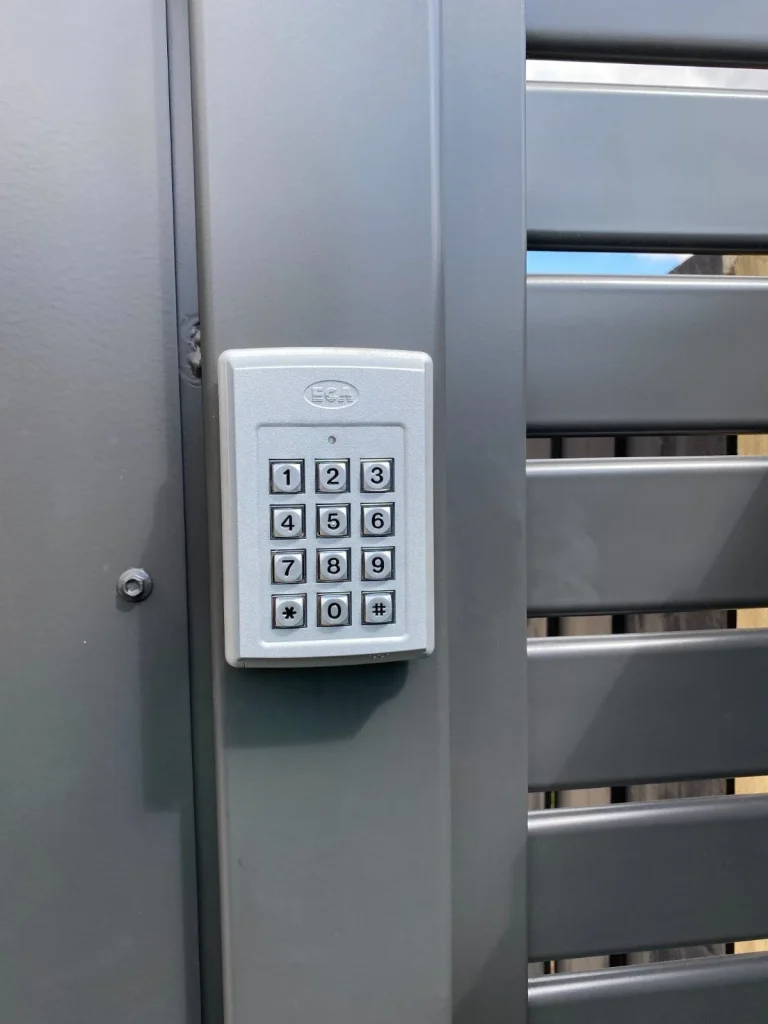
Yes. Both cantilever and track gates can be fitted with electric motors, remotes, intercoms, keypads and even phone controls. Automation is hugely popular right now, because nobody enjoys hopping out of the car in the rain to open a gate. (See: my opening story.)
Heavy gates need stronger motors, and a gate that’s well balanced and moves freely will put less strain on the motor. That’s another reason good fabrication matters. A poorly built gate will wear out even the best motor.
So, Which Is Better for You?
Here’s my honest rule of thumb.
Pick a track sliding gate if:
- You’re on a tighter budget.
- Your driveway is flat and fairly clean.
- You have a heavy gate in mind and a straight, even run.
- You don’t mind a little regular cleaning.
Pick a cantilever sliding gate if:
- Your driveway is uneven, sloped or gravelled.
- You have lots of leaves, dirt or wet weather to deal with.
- You want a cleaner look and no tripping hazard.
- You have enough fence line on the side for the extra length.
And if you’re still undecided? That’s normal. Sometimes it takes a site visit to know for sure.
Do You Need a Permit in Melbourne?
It depends. Rules can vary between councils, and things like gate height, fence location, heritage overlays and front-fence limits can all come into play. Some properties need a permit, and some don’t.
My advice: check with your local council before you commit, and ask your fabricator what they know about your area. A little time up front can save a lot of headaches later.
Frequently Asked Questions
Is a cantilever gate better than a track gate?
Not always. Cantilever gates are better on uneven ground and in messy conditions. Track gates are often cheaper and work well on flat, clean driveways. It comes down to your site and budget.
Which sliding gate lasts longer?
Both can last for many years if they’re well built and looked after. Cantilever gates often have less wear from dirt, while track gates need regular track cleaning to avoid problems.
Do cantilever gates need more space?
Yes. They generally need about 1.5 times the opening width in fence line, because of the balancing tail. Track gates need roughly the width of the opening.
Are track sliding gates a tripping hazard?
They can be. The track sits at ground level, so prams, bikes and shoes can catch on it. Some are fitted to sit flush, but it’s worth asking.
Can I automate a sliding gate?
Yes. Both types work with electric motors, remotes, intercoms and keypads. Make sure the system includes safety sensors and meets Australian standards.
How much does a sliding gate cost in Melbourne?
It depends on size, materials, finish and automation. Track gates tend to cost less than cantilever gates, but the only way to get a reliable price is a quote based on your site.
What’s the best material for a Melbourne sliding gate?
Steel is a popular pick for strength and security, with a good protective coating or galvanising to handle our weather. Aluminium is lighter and rust-resistant, and sometimes suits smaller or decorative gates.
Final Thoughts: Choose the Gate That Fits Your Life
Here’s the short version. Track gates are the budget-friendly workhorse. Cantilever gates are the tidy, low-fuss option that costs a bit more. Neither is “better” on its own. The right one fits your driveway, your fence line, your weather and your wallet.
If you’re in Melbourne and still scratching your head, talk to a local fabricator who can see your property and give you straight answers. At Adonai Steel Fabrication, we’d be happy to take a look, measure up and help you choose a gate you won’t have to think about for years.
Ready to get started? Get in touch with Adonai Steel Fabrication today for a no-fuss chat and a quote for your cantilever or track sliding gate.