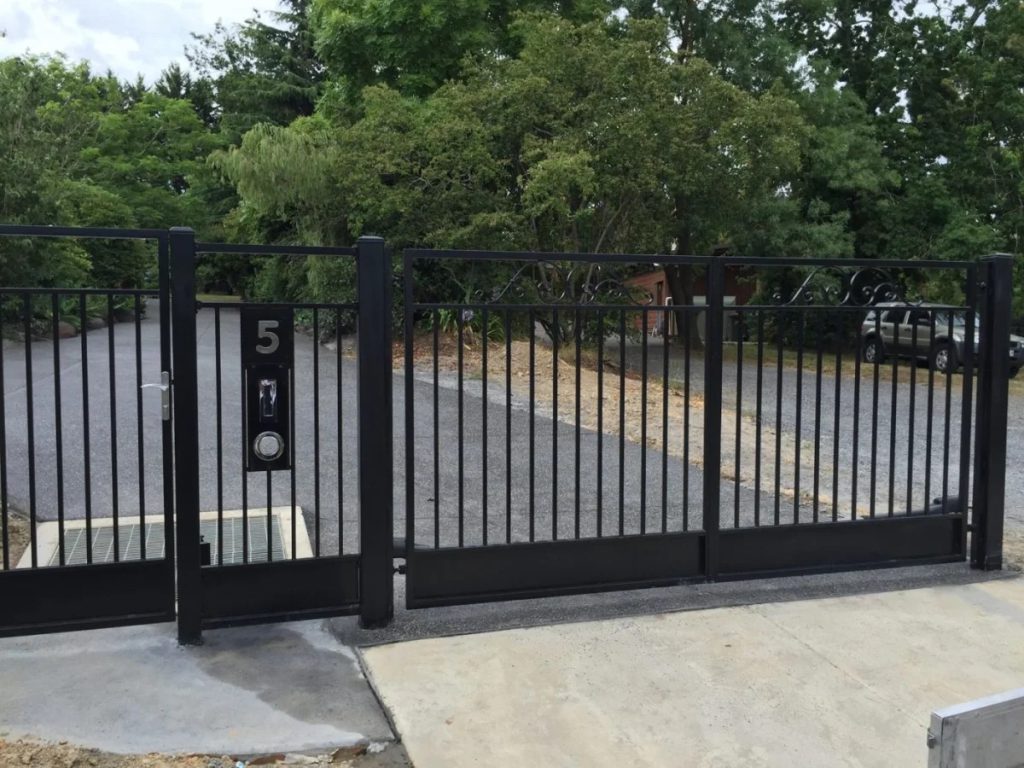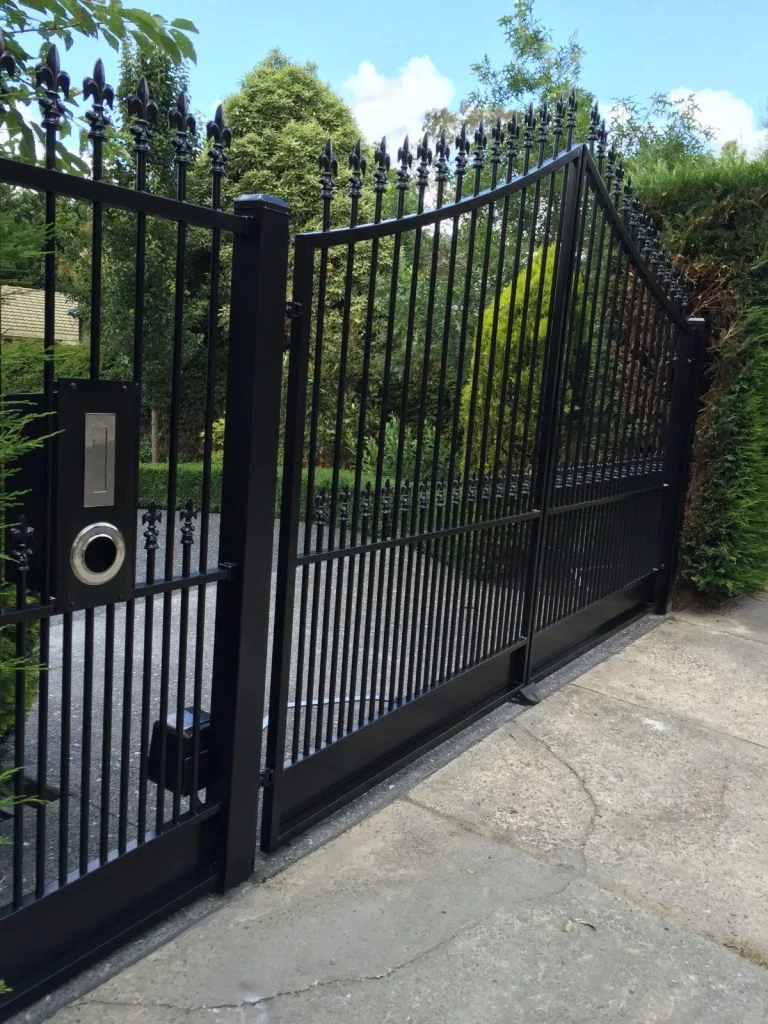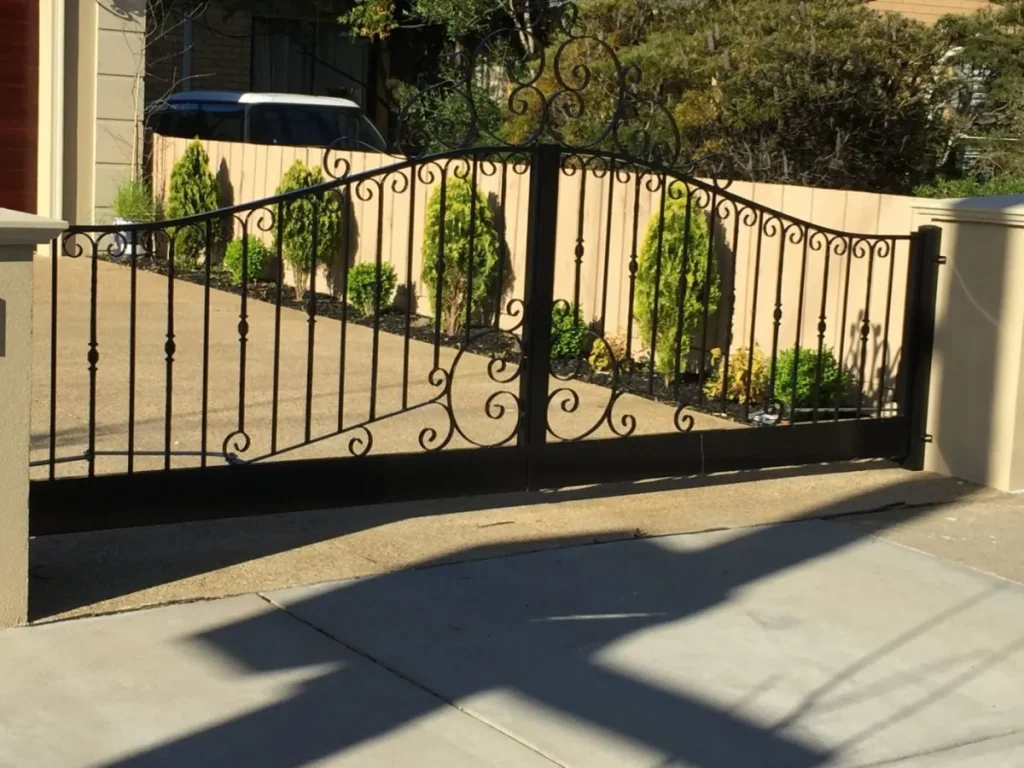
Let me guess. You’re standing at the end of your driveway in the rain, car idling, wrestling with a heavy gate while the neighbour’s dog watches you like you’re a free show. Somewhere between the soggy sleeves and the swearing, you think: “I need an automatic gate. How much is this going to cost me?”
Fair question. And honestly, the answer you’ll find online is usually “it depends,” which is about as helpful as a chocolate teapot.
So I’ll do better. At Adonai Steel Fabrication, we build and fit gates around Melbourne, and the same questions come up over and over. Below is a plain-English breakdown of automatic gate cost in Melbourne: what you’ll pay, why prices swing so much, and where you can save without ending up with a gate that sulks after two winters.
The Short Answer: What Does an Automatic Gate Cost in Melbourne?
The price of a fully installed automatic driveway gate depends on the gate type, size, materials, motor, electrical work and extras. Simple setups cost less. Big, custom, fancy ones cost more. The only way to get an accurate number is to have your site measured.
Automatic gates are also called electric or motorised gates. The same cost factors apply whichever name you search for, whether you’re comparing electric gate installation quotes or automatic driveway gate prices.
Here’s a rough guide. Treat these as ballpark figures only, because every property is different.
| Gate Type | What Affects the Price | Best For |
| Single swing gate (steel or aluminium) | One panel and usually one motor | Narrow driveways, simple entries |
| Double swing gate | Two panels, two motors in most cases, more wiring | Wider driveways with room to swing |
| Sliding gate | Track or footing work and a longer install | Tight spaces, sloping blocks, busy streets |
| Cantilever gate | A heavier frame and bigger footings | Uneven ground, no track wanted |
| Fully custom feature gate | Custom design, extra labour and finishing | Statement entries, acreage, heritage looks |
Every site is different, so always get your quote in writing.
Now let’s look at what drives the price.
What Makes Up the Price? (It’s More Than Just the Gate)
When people ask about driveway gate prices in Melbourne, they often picture one number. In reality, you’re paying for a handful of separate things stacked together:
- The gate itself (materials and fabrication)
- The motor or operator
- Posts, footings and tracks
- Electrical work
- Access controls (remotes, keypads, intercoms)
- Installation labour
- Permits and extras, if needed
Think of it like buying a car. The sticker price is just the start. Then you meet the tyres, the registration and the floor mats.
1. The Gate: Materials and Size
This is usually the biggest chunk. The material you pick changes both the price and how long the gate lasts.
| Material | Cost Level | Pros | Cons |
| Steel | Mid to high | Very strong, great security, can be made in any design | Needs good coating to fight rust |
| Aluminium | Mid | Lightweight, rust-resistant, easy on motors | Less tough than steel |
| Timber | Mid | Warm, classic look | Needs regular upkeep, and Melbourne weather isn’t kind |
| Wrought iron style | High | Elegant, traditional | Heavy, pricey |
I’m a bit biased here, since we work with steel every day. But a well-made, properly powder-coated steel gate is hard to beat for strength and long-term value. Aluminium is a smart pick if you want something lighter or you’re near the coast.
Size matters too. A 3 metre gate and a 6 metre gate are not just “double the metal.” They need stronger posts, bigger motors and more labour.
2. The Motor (a.k.a. the Muscle)
The motor is what turns your gate from a chore into a convenience. The price of the operator depends on the type and how heavy your gate is.
Here’s the bit people miss: a cheap motor on a heavy gate is a false economy. It strains, it overheats, and it dies early. Match the motor to the weight and size of the gate, and you’ll thank yourself in five years.
3. Posts, Footings and Tracks
Your gate is only as good as what holds it up. Solid concrete footings and strong posts are non-negotiable. Sliding gates also need a track or a support structure. Skimping here is how you end up with a gate that leans like the Tower of Pisa.
Expect this to add a few hundred to a couple of thousand dollars, depending on the ground and the gate size.
4. Electrical Work
Your gate needs power, and in Victoria that means a licensed electrician doing the wiring. Costs rise if the power source is far from the gate, if trenching is needed, or if you’d prefer solar. Solar is a handy option for gates a long way from the house, though it’s best for lighter use.
Electrical costs depend on how far the power source is from the gate, and long cable runs or trenching push them higher.
5. Remotes, Keypads and Intercoms
Here’s where it gets fun, and where costs can sneak up on you.
- Remotes: Usually included in small numbers, with extras costing more
- Keypads: A modest add-on
- Intercoms (audio): A step up from a keypad
- Video intercoms with phone connection: The priciest option here
- Smartphone control: Often a modest add-on, and well worth it
I’m a fan of phone control. It’s brilliant when your cousin turns up unannounced and you can open the gate from the couch without finding your shoes.
Swing, Sliding or Cantilever: Which Costs What?
The style of gate you pick shapes the price more than most people expect.
Swing Gates
These open like a door, either single or double. They’re often the most affordable automatic option, and they look classic. But you need clear space for them to swing. If your driveway slopes upward, or a garden bed or car is in the way, swing gates can become a headache.
Sliding Gates
Sliding gates glide sideways along a track or rail. They’re a great fit for steep driveways, narrow frontages, and anywhere you don’t have room to swing. They cost more than a basic swing gate, but you’re paying for flexibility. You also need clear space along the fence line for the gate to slide into.
Cantilever Gates
These slide without a ground track, hanging off a counterweight system. They’re fantastic over uneven ground or where dirt and leaves would clog a track, and they need more fence length behind them. They also cost more, since there’s more engineering involved.
Single vs Double Gates
A single-leaf gate is one panel. A double-leaf gate is two panels meeting in the middle. Wider driveways usually need the double.
Two panels means two sets of hinges, two motors in most cases, and more wiring. So a double swing gate often costs noticeably more than a single one.
Size matters in a bigger way than people think. A 6 metre sliding gate costs a lot more than a 3 metre swing gate. More steel, a bigger motor, a longer track and a longer install day.
Material: Steel, Aluminium or Timber?
You’re not just buying a way in. You’re buying the first thing people see when they pull up to your place.
- Steel: Tough and strong. It’s our bread and butter at Adonai. Good for security and heavy-duty gates. Needs a good coating so it doesn’t rust, especially near the coast.
- Aluminium: Lighter, so it’s easier on the motor. It won’t rust, which is handy in salty air. Often a bit less strong than steel.
- Timber: Warm and classic, and it looks great. It’s heavier, needs regular upkeep, and doesn’t love the Aussie sun without care.
Lighter gates need smaller motors, and smaller motors cost less. A heavy solid steel gate needs a stronger motor, and that’s where the price climbs. See our aluminium vs steel guide.
What Else Can Push the Price Up?
Here’s the part where I get honest. These are the things that surprise people on quote day:
- A sloping driveway. Melbourne has plenty of hilly streets. Slopes need extra planning and sometimes extra hardware.
- Custom designs. Laser-cut patterns, timber-look slats, curved tops and house numbers all add fabrication time.
- Removing an old gate. Taking out and disposing of what’s there costs money.
- Poor ground conditions. Clay soil, rock and tree roots can complicate footings.
- Extra safety features. Sensors, safety edges and flashing lights are important, and they add cost.
- Brick or render pillars. Beautiful, but a separate trade and budget.
- Rushed jobs. If you need it done next week, expect to pay for that urgency.
Do You Need a Permit?
Sometimes, yes. In Victoria, fence and gate rules can depend on height, location and whether your property is under a heritage overlay or other planning controls. Front fences over a certain height may need approval, and some areas have extra restrictions.
I’m not going to pretend I can give you a one-size-fits-all answer here. The sensible step is to check with your local council before you commit to a design. A reputable gate company will usually help you work through this, or at least point you in the right direction.
Also, automatic gates must be safe. Australian standards cover things like crush protection and sensors, so make sure whoever installs yours follows them. A gate that can’t safely detect a kid, a pet or a wheelie bin isn’t a bargain at any price.
Is a Cheap Automatic Gate Worth It?
Honestly? Rarely.
I’ve seen it more times than I’d like. Someone buys a budget gate kit online, tries to save a few grand, and a year or two later the motor’s cooked, the hinges are sagging and the finish is flaking. Then they pay twice.
Here’s a simple way to think about it:
- Cheap gate: Lower cost today, higher cost over ten years
- Well-made gate: Higher cost today, lower cost over ten years
It’s a bit like boots. You can buy the cheap pair every season, or the good pair that lasts a decade. Your driveway is walking through rain, sun and the occasional rogue reversing car. It deserves the good boots.
Is It Safe? Don’t Skip the Safety Gear
An automatic gate is a heavy object moving by itself. That’s not something to cheap out on.
Good installations include safety sensors that stop or reverse the gate if a person, pet or car is in the way. Ask your installer what safety features are included, and whether the gate meets current Australian requirements. If a quote leaves out sensors to hit a lower price, that’s a red flag, not a bargain.
What About Ongoing Costs?
Good news: automatic gates aren’t a money pit. But they’re not zero-cost either.
| Ongoing Cost | What to Expect |
| Annual service and check-up | Worth doing once a year |
| Remote battery replacements | A few dollars each |
| Occasional repairs (sensors, hinges) | Varies |
| Electricity | Very low, usually just a few dollars a month |
A yearly service keeps things humming. A little lubrication and a safety check can save you from a costly breakdown later.
Why Do Quotes Vary So Much?
You get three quotes and they’re thousands apart. Annoying, right? There are usually good reasons:
- Different gate sizes and materials
- Different motor brands and quality
- Different inclusions (electrical, safety, remotes)
- Different warranty and after-sales support
When you compare, compare line by line. The cheapest quote isn’t always the cheapest in the end.
How to Get an Accurate Quote (and Not Get Stung)
If you want a number you can actually rely on, here’s what I’d do.
- Measure your driveway width and note the slope. Even rough numbers help.
- Decide on your must-haves. Do you need an intercom, or just remotes?
- Get at least two or three written quotes. Compare what’s included, not only the total.
- Ask what’s in the price. Does it cover electrical, concrete, the motor, safety sensors and removal of the old gate?
- Ask about warranty and servicing. A good company stands behind its work.
- Ask to see past work. Photos or local examples tell you a lot.
And a small tip: the cheapest quote isn’t always the best, and the dearest isn’t always better either. You want the one that’s clear, detailed and honest.
Ways to Save Money (Without Cutting Corners)
I’m not here to talk you into spending more. A few honest ways to trim the bill:
- Go for a swing gate if your driveway allows it.
- Keep the design simple. Fancy scrolls and laser-cut patterns add hours of labour.
- Keep it to one entry system. A basic remote and keypad costs far less than a full smart system with a video intercom.
- Reuse existing posts if they’re solid and straight.
- Choose standard sizes where you can instead of fully custom.
- Retrofit if you can. If your gate’s fine, automate it.
- Plan the power early. If the cable route is short, you save on trenching.
What we’d never suggest saving on: safety sensors, post strength, and the quality of the motor. These are the things that fail loudly and expensively.
Common Questions About Automatic Gate Cost in Melbourne
How much does it cost to automate an existing gate?
If your gate is already solid and in good shape, the cost of adding a motor and controls depends on the gate’s weight and the electrical work needed. If the gate is old or sagging, it may be smarter to replace it.
Are sliding gates more expensive than swing gates?
Usually, yes. Sliding gates tend to cost more because of the track, extra framing and heavier hardware. But if your driveway is steep or tight, they often make more practical sense.
How long does installation take?
Most jobs take a few days to a couple of weeks once the gate is built, depending on concrete curing time, electrical work and weather. Custom gates take longer because they’re made to order.
How long do automatic gates last?
A well-built, well-maintained gate can last 15 to 25 years or more. Motors and electronics usually last around 8 to 15 years, depending on use and quality.
Do automatic gates add value to your home?
They often do. Gates add security, privacy and street appeal, which many buyers love. You won’t necessarily get every dollar back, but a good-looking gate helps a property stand out.
Can I install an automatic gate myself?
You can try the physical bits if you’re handy, but the electrical work must be done by a licensed electrician, and safety setup is critical. A badly installed gate can be dangerous, so this is one DIY project I’d think twice about.
What happens if the power goes out?
Most good systems have a manual release or battery backup, so you can still get in and out. Always ask about this before you buy.
Are solar-powered gates an option?
Yes. They’re great for gates far from the house, or where trenching power would be costly. They suit lighter, less frequent use best.
Final Thoughts: Is It Worth It?
Here’s my honest take. An automatic gate isn’t a cheap purchase, but it’s one of those upgrades you notice every single day. No more getting out of the car in the rain. Better security. A nicer-looking home. And a lot fewer awkward moments with that neighbourhood dog.
Expect the price to reflect your gate type, size and extras, allow more if you’re going custom, and focus on quality over a rock-bottom price. Your future self, dry and warm in the driver’s seat, will be very pleased.
Ready to Get a Real Number?
Every driveway is different, and the best way to find out what your gate will cost is to have someone look at your site.
At Adonai Steel Fabrication, we design, build and install driveway and automatic gates across Melbourne, made to suit your property, your style and your budget. Get in touch today for a free, no-pressure quote, and let’s get that gate working for you.